Your Body Clock Has No Idea Where It Is: A Traveler's Guide to Surviving Scandinavian Light Extremes
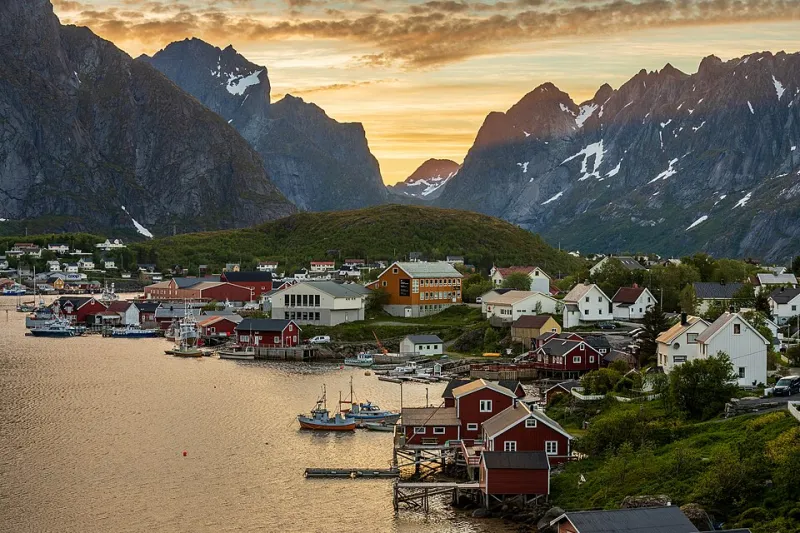
Photo: Ximonic (Simo Räsänen), CC BY-SA 4.0, via Wikimedia Commons
Let's be honest: most Americans planning a Scandinavian trip spend way more time researching packing cubes and flight deals than they do thinking about what happens when the sun doesn't go down at 9 p.m. — or when it barely shows up at all. Then they arrive in Tromsø in late June, still buzzing at 1 a.m. because it looks like noon outside, and suddenly the whole trip feels sideways.
Scandinavia operates on a different relationship with daylight than anywhere most of us have ever lived. That's not a flaw in the destination. It's one of the most genuinely wild things about traveling this far north. But walking into it blind? That's how you spend your second day in Bergen napping through the best fjord hike of your life.
Here's what's actually going on — and how to work with it instead of against it.
What Polar Night and Midnight Sun Actually Mean for Your Body
Your circadian rhythm runs on light cues. When light hits your eyes in the morning, your brain suppresses melatonin and tells your body to wake up. When it gets dark, the process reverses. Simple enough in Cleveland or Portland. Considerably less simple when you're in Svalbard in December and the sun doesn't rise for two months straight.
Polar night — called mørketid (dark time) in Norwegian — occurs above the Arctic Circle during winter months. In Tromsø, the sun stays below the horizon from late November to mid-January. Further north on Svalbard, that stretch extends even longer. Meanwhile, come summer, those same places experience the midnight sun: continuous daylight that can last weeks.
Scientifically, both extremes affect the same system. Continuous darkness suppresses serotonin production and can trigger what Norwegians casually call vinterdepresjon — winter blues — even in short-term visitors. Continuous light, on the other hand, delays melatonin release and makes it genuinely hard to feel sleepy even when your body is exhausted. Jet lag from a transatlantic flight compounds both effects significantly.
The good news: your body adapts faster than you think, especially with a few deliberate strategies.
The Mistake Americans Make (It's Not What You'd Guess)
Most travelers assume winter darkness is the hard one. Pack layers, get a SAD lamp, push through. And sure, polar night has its challenges. But in our experience helping American adventurers plan Nordic trips, the midnight sun causes more disrupted vacations than the dark ever does.
People arrive in June or July, feel weirdly energized for the first 36 hours, stay out hiking until 11 p.m. because it looks like afternoon, skip meals because hunger cues are off, and then crash hard around day three. They came for adventure and end up spending half a day in a hotel room wondering why they feel like they have a hangover without the fun part.
The fix is almost embarrassingly low-tech: blackout curtains and a watch. Seriously. Most quality hotels in Norway and Sweden already have excellent room-darkening shades, but if yours doesn't, a cheap sleep mask is your best travel investment. Set alarms. Eat meals on a schedule regardless of the light outside. Treat your sleep window like an appointment.
Leaning Into Polar Night Instead of Dreading It
Here's a reframe that changes everything: the dark season in Scandinavia isn't something locals endure. It's something many of them genuinely love. The Danish concept of hygge and the Norwegian equivalent, koselig, are essentially philosophies built around making darkness feel like a gift — warm light, good food, close company, nowhere to rush.
For a US traveler, a midwinter trip to southern Norway's Sørlandet coast or a cozy cabin stay in the Norwegian highlands can be one of the most genuinely restorative travel experiences you'll ever have. The pressure to sightsee constantly evaporates. You slow down. You eat well. You sleep deeply in a way that's hard to achieve back home.
Practical tips for embracing the dark season:
- Get outside anyway. Even during polar twilight — that moody blue-hour glow that lasts a couple of hours each midwinter day — being outdoors in natural light (however dim) helps regulate your mood and rhythm.
- Use light therapy proactively. Many Scandinavians use light therapy lamps every morning during winter. Bringing a compact travel version or using one at your accommodation for 20-30 minutes at breakfast makes a measurable difference within days.
- Lean into the food culture. Norwegian winter food — hearty stews, fresh seafood, open-faced sandwiches beside a fire — is comfort food at its finest. Let meals anchor your day.
Making the Midnight Sun Work For You
The midnight sun is legitimately one of the most surreal experiences available to any traveler. Hiking a mountain ridge at 11:30 p.m. with golden light across the fjords below you is the kind of memory that doesn't fade. The trick is scheduling for it rather than just stumbling into it.
Because local outdoor culture shifts dramatically in summer — restaurants stay open later, activity operators run evening tours, trails fill up in what would be the middle of the night back home — you can structure your days in ways that feel almost impossible elsewhere. Sleep in, take a slow morning, hit the big hike in the late afternoon when crowds have thinned, and watch the sun hover at the horizon long past midnight.
This schedule works with your jet-lagged body if you let it. That tendency to feel wide awake at midnight when you first arrive from the US? In summer Norway, that's not a bug. It's a feature.
A Few Quick-Hit Adjustments That Actually Work
Before you land:
- Start shifting your sleep schedule 3-4 days before departure (go to bed and wake up an hour earlier each day)
- Stay hydrated on the transatlantic flight and skip the in-flight alcohol
Once you're there:
- Get outside within an hour of waking up, no matter the season
- Don't nap longer than 20 minutes in the first two days
- In summer: sleep mask, blackout curtains, consistent bedtime alarm
- In winter: light therapy lamp at breakfast, daily outdoor time even in twilight
Scandinavia's light extremes are one of the things that make this region genuinely unlike anywhere else on earth. Fighting them is a losing game. Travelers who arrive curious and adaptable — the bold explorer type — tend to find that these very extremes become the highlight of their trip, not the obstacle they feared.
Your body clock will catch up. Give it a little help.